Of all the classes in the players handbook, the ranger is perhaps the most diverse. With the right stats, skills, feats and equipment; they can handle combat almost as well as a fighter, sneak almost as well as a rogue and still have a few spells up their sleeve. A ranger has a supporting role, always useful, rarely exceptional. The most common problem with playing a ranger is knowing what to do when. It is when the party is out of civilisation however that a ranger really comes into their own, as masters of the wilderness the ranger is the ultimate hunter, scout and wilderness guide, moving stealthily through the undergrowth, finding food and thriving in the harsh wilds.
ABILITIES
A ranger's skills and abilities require a relatively balanced set of stats, due to their role as all rounders. The general order (highest to lowest) would preferably be;
DEXTERITY,
CONSTITUTION,
STRENGTH,
WISDOM,
INTELLIGENCE,
CHARISMA
Dexterity heads the list, due to a rangers common use of a bow, light armour, and several skills, most notably the stealth skills (move silently and hide) which use this ability. Charisma is at the bottom because traditionally rangers are known to be quite reserved individuals, very few class skills or features use this ability, only handle animal and wild empathy, both of which are better handled by using spells, (speak with animals, calm animals and charm animal, are 1st level ranger spells.
RACES
Most races in the players hand book can take to the ranger lifestyle, humans, and elves make some of the best (and most obvious) ranger's, half orcs can make good rangers too, focusing more on combat ability than on skills, the reduced speed of dwarves, halflings and gnomes can reduce the effectiveness of a character class which prides itself on being everywhere at once, and the reduced damage (both from smaller weapons and reduced strength) of the halfling and gnome races give a serious blow to smaller rangers that is difficult to make back up.
SKILLS
A ranger depends on their skills, perhaps more than any other feature, it's their skills that make them so adaptable. This makes it tempting to split your skill points between several skills rather than maxing out a few, this isn't advisable, because to keep up with the more specialist members of the party, you need to do what you do well. here are a list of skill groupings most useful for a ranger.
Woodcraft.
Survival, Heal and Knowledge (nature) skills.
These are just so quintessentially ranger, used to track, hunt for food, identify flora and fauna, make natural poisons and medicines.
Scouting.
Listen, Spot, and Knowledge (geography) skills.
Immeasurably useful for wilderness encounters, setting ambushes, and reconnaissance.
Hunting.
Move Silently, Hide and Craft (trap making) skills.
Useful both when stalking pray through forests, and when sneaking through dungeons, these become amazing at later levels when a ranger gets first camouflage then hide in plain sight as class features.
Animal training.
Handle Animal and Ride skills.
When combined with wild empathy, and the speak with animals spell, your animals can accomplish actions far beyond anything expected of them.
FEATS
As with a lot of classes, a ranger's feats are what give them a true identity, giving serious boosts to the areas the individual ranger wants to focus on, some to consider include.
For all rangers:
alertness, animal affinity, diehard, mounted combat, self sufficient, weapon focus, from players handbook. companion spellbond, trophy collector. from players handbook II. Dash, favoured power attack, improved favoured enemy, from complete warrior. natural bond, quick reconnoitre from complete adventurer.
For two weapon rangers:
 two weapon defence, from players handbook. two weapon pounce, two weapon rend from players hand book II. improved buckler defence, improved two weapon defence, pin shield, from complete warrior. oversized two weapon fighting from complete adventurer
For archery rangers:
 point blank shot, precise shot, farshot shot, on the run, from players hand book. deadeye shot, penetrating shot from players handbook II. Improved mounted archery, improved rapid shot, ranged disarm, ranged pin, ranged sunder, from complete warrior.
CLASS FEATURES
The class features of the ranger are many and diverse, here we will take a look at the more important, and unique features being a ranger gives.
The ranger class has several unique abilities in 3.5, one of the most famous and arguably the most useful is "favoured enemy" a bonus on hunting, trapping, lying to and, above all, killing certain foes. When choosing favoured enemies there are certain things to consider. Firstly the list of actions it actually effects; spot, listen and survival (tracking) are going to be useful against all types of creature, bluff and sense motive however are very rarely used against things such as oozes, animals, constructs, vermin, and other things of animal (or lower) intelligence, though they are only useful against a very low number of undead (vampires liches etc.) when they are used they are very useful indeed. Secondly the likelihood of actually meeting one of these creatures, in most campaigns you don't bump into demons and devils on a regular basis, so having outsider (evil) as a favoured enemy isn't going to be vindicated that often. Thirdly, what foes actually require the bonuses, most reptilian humanoids, (kobolds, lizardfolk etc.) aren't what you'd call talkative, so the sense motive, and bluff is rarely needed against them, they are usually territorial, so you know roughly where they are, as such tracking becomes less essential, and although I wouldn't belittle their combat effectiveness, I'm not sure if the extra damage is essential against them. Fourth, when you select your favoured enemies is important, you may not start seeing dragons on a regular enough basis for them to warrant a favoured enemy status until 20Th level, but at that point your maximum bonus is +4, not really worth it against the reptilian monsters, having said that to start hunting them at 1st or 5Th level (maximum bonus for either being +10) stops you hunting things more appropriate to your level, your best bet is to pick a favoured enemy type that incorporates a wide range of challenge ratings, undead and monstrous humanoids for example. Last, but by no means least, your character should have a reason to hunt these creatures above all others, remember that favoured enemy status means special training has been sought out and undertaken with the sole purpose of hunting down and eliminating the creatures in question, this is hatred to the point of obsession, and requires a reason for this prejudice.
Wild Empathy is a bit of a dark horse (pun intended), in the right situation, with the right party, it can be very useful, that said, the ranger's usually low charisma, the fact its a relatively slow process, and the fact that the rest of the party, indeed the ranger themselves have quicker and easier (though not always better) ways of dealing with the same problems, means it can just as easily be overlooked. A guard dog can be as easily quieted with a poisoned or drugged bit of meat, than convinced you are friendly by having a ranger whisper in it's ear, a wolf pack in the middle of the forest can be killed off fairly easily by even a modestly experienced party rather than have a ranger convince them the party is not a threat, however, if some one comes across a dead/doped guard dog the alarm can be raised, and having a wolf pack that won't attack you on sight can be quite useful if you're ever being chased through that same forest. It is usually worth a go, if you muck the roll up, you can usually revert to a second option without losing anything but time.
Which of the two Combat Style paths you choose to follow can be the biggest decision you have to make for a ranger, before we look at the two in detail however, the downsides of this class feature should be looked at, firstly whichever form you choose your defence will take a serious hit, as both limit you to light armour (admittedly the only armour type you begin proficient in) and use both hands, thus taking away the ability to use shields. Secondly three bonus feats does not a master make, if you're trying to specialise in either bowman ship, or two weapon fighting, fighter class is a better option, to focus on combat as a ranger is to limit yourself to eating up a vast majority of your level (and possibly race) based feats, complimenting a class feature. having said all of that, three bonus feats are always useful to have, so to compare the two options. Archery; the feats here (rapid shot, many shot and improved precise shot, in order) are in many ways more useful that the feats for two weapon fighting, and coupled with any rangers high dexterity, as well as the dangers of light armour, it seems like the obvious choice, however, a ranger specialising in archery, has little way of making up for the shortcomings in combat. A two weapon fighting ranger, on the other hand, receives perhaps less impressive feats (two weapon fighting, improved two weapon fighting and greater two weapon fighting, in order) however, through feats such as two weapon defence, improved two weapon defence and improved buckler defence (the latter two found in complete warrior) they can go some way to make up for that, and the relatively high strength needed to make this option worth while can be utilised, through mighty composite bows, in ranged combat as well as close quarter combat. so to summarise, ignoring combat style, allows for greater armour, and freedom of feat choice. Archery makes for a great ranged specialist, and two weapon fighting makes for a good all round combatant, which can hold their own in both close quarters and ranged fights.
A ranger's Animal Companion is one of their most useful features of the class, however, care must be taken when selecting the animal, because, unlike a druid, the rangers animal companion will not advance quickly or to fantastic levels, for this reason a ranger’s animal companion should not be taken purely for combat, and it is not advisable to exchange advancement for a more powerful creature. there are three types of animal companion; bird, mount and fighting beast, we will look at each type separately.
Birds.
 point blank shot, precise shot, farshot shot, on the run, from players hand book. deadeye shot, penetrating shot from players handbook II. Improved mounted archery, improved rapid shot, ranged disarm, ranged pin, ranged sunder, from complete warrior.
CLASS FEATURES
The class features of the ranger are many and diverse, here we will take a look at the more important, and unique features being a ranger gives.
The ranger class has several unique abilities in 3.5, one of the most famous and arguably the most useful is "favoured enemy" a bonus on hunting, trapping, lying to and, above all, killing certain foes. When choosing favoured enemies there are certain things to consider. Firstly the list of actions it actually effects; spot, listen and survival (tracking) are going to be useful against all types of creature, bluff and sense motive however are very rarely used against things such as oozes, animals, constructs, vermin, and other things of animal (or lower) intelligence, though they are only useful against a very low number of undead (vampires liches etc.) when they are used they are very useful indeed. Secondly the likelihood of actually meeting one of these creatures, in most campaigns you don't bump into demons and devils on a regular basis, so having outsider (evil) as a favoured enemy isn't going to be vindicated that often. Thirdly, what foes actually require the bonuses, most reptilian humanoids, (kobolds, lizardfolk etc.) aren't what you'd call talkative, so the sense motive, and bluff is rarely needed against them, they are usually territorial, so you know roughly where they are, as such tracking becomes less essential, and although I wouldn't belittle their combat effectiveness, I'm not sure if the extra damage is essential against them. Fourth, when you select your favoured enemies is important, you may not start seeing dragons on a regular enough basis for them to warrant a favoured enemy status until 20Th level, but at that point your maximum bonus is +4, not really worth it against the reptilian monsters, having said that to start hunting them at 1st or 5Th level (maximum bonus for either being +10) stops you hunting things more appropriate to your level, your best bet is to pick a favoured enemy type that incorporates a wide range of challenge ratings, undead and monstrous humanoids for example. Last, but by no means least, your character should have a reason to hunt these creatures above all others, remember that favoured enemy status means special training has been sought out and undertaken with the sole purpose of hunting down and eliminating the creatures in question, this is hatred to the point of obsession, and requires a reason for this prejudice.
Wild Empathy is a bit of a dark horse (pun intended), in the right situation, with the right party, it can be very useful, that said, the ranger's usually low charisma, the fact its a relatively slow process, and the fact that the rest of the party, indeed the ranger themselves have quicker and easier (though not always better) ways of dealing with the same problems, means it can just as easily be overlooked. A guard dog can be as easily quieted with a poisoned or drugged bit of meat, than convinced you are friendly by having a ranger whisper in it's ear, a wolf pack in the middle of the forest can be killed off fairly easily by even a modestly experienced party rather than have a ranger convince them the party is not a threat, however, if some one comes across a dead/doped guard dog the alarm can be raised, and having a wolf pack that won't attack you on sight can be quite useful if you're ever being chased through that same forest. It is usually worth a go, if you muck the roll up, you can usually revert to a second option without losing anything but time.
Which of the two Combat Style paths you choose to follow can be the biggest decision you have to make for a ranger, before we look at the two in detail however, the downsides of this class feature should be looked at, firstly whichever form you choose your defence will take a serious hit, as both limit you to light armour (admittedly the only armour type you begin proficient in) and use both hands, thus taking away the ability to use shields. Secondly three bonus feats does not a master make, if you're trying to specialise in either bowman ship, or two weapon fighting, fighter class is a better option, to focus on combat as a ranger is to limit yourself to eating up a vast majority of your level (and possibly race) based feats, complimenting a class feature. having said all of that, three bonus feats are always useful to have, so to compare the two options. Archery; the feats here (rapid shot, many shot and improved precise shot, in order) are in many ways more useful that the feats for two weapon fighting, and coupled with any rangers high dexterity, as well as the dangers of light armour, it seems like the obvious choice, however, a ranger specialising in archery, has little way of making up for the shortcomings in combat. A two weapon fighting ranger, on the other hand, receives perhaps less impressive feats (two weapon fighting, improved two weapon fighting and greater two weapon fighting, in order) however, through feats such as two weapon defence, improved two weapon defence and improved buckler defence (the latter two found in complete warrior) they can go some way to make up for that, and the relatively high strength needed to make this option worth while can be utilised, through mighty composite bows, in ranged combat as well as close quarter combat. so to summarise, ignoring combat style, allows for greater armour, and freedom of feat choice. Archery makes for a great ranged specialist, and two weapon fighting makes for a good all round combatant, which can hold their own in both close quarters and ranged fights.
A ranger's Animal Companion is one of their most useful features of the class, however, care must be taken when selecting the animal, because, unlike a druid, the rangers animal companion will not advance quickly or to fantastic levels, for this reason a ranger’s animal companion should not be taken purely for combat, and it is not advisable to exchange advancement for a more powerful creature. there are three types of animal companion; bird, mount and fighting beast, we will look at each type separately.
Birds.
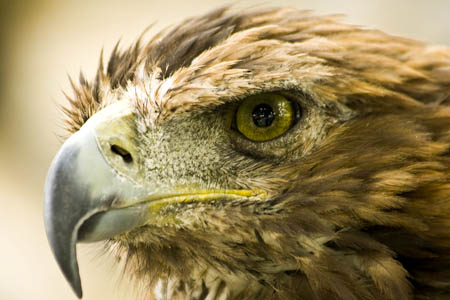 Namely, the eagle, hawk and owl, the chief advantages of birds is their ability to, obviously, fly, this (combined with the link shared with your animal companion, and certain spells, chiefly speak with animals) makes them excellent scouts, spies and messengers. Also due to their use in falconry as a hunting technique, it is easy to explain their presence should you wish to keep your adventuring career secret for any reason (covert operations and such). The eagle is obviously the biggest of the three, making it more effective in combat, with more attacks dealing more damage and more hit points, if a slightly lower AC and attack bonus (due to it's bigger size category), it is also the fastest of the three. The hawk is slightly smaller, weaker, but with a higher AC, it deals less damage than an eagle with only one attack instead of three, but a higher hit bonus, it's smaller size means it can get unnoticed into much more confined spaces than an eagle, and is less conspicuous even out in the open. The owl is the weakest and slowest of the lot, but it's ability to fly silently, as well as it's bonuses to spot and listen checks make it an excellent information gatherer.
Mounts.
Namely, the camel, riding dog, horse (heavy or light) and pony, the uses of a mount are fairly obvious, but it is important to note, outside of a desert environment, (where the advantages are fairly obvious) there are no real benefits to having camel over a horse, they are slower and less able in combat.
Fighting Beasts.
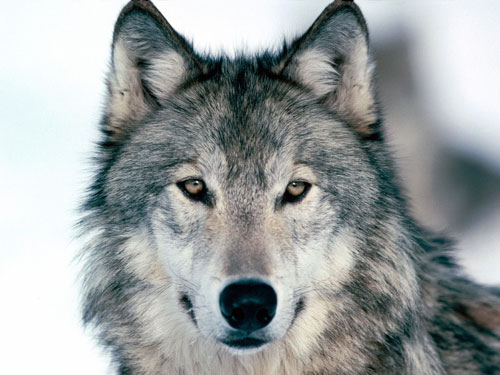 Namely, the badger, dire rat, dog, snake (medium or small viper) and wolf. Given the slow advancement of a rangers animal companion, the fighting beasts are a risky choice, and (with the exception of the dog) all of them draw attention to the owner in civilised society, however the benefits a good set of jaws adding to the combat power of a party should not be underestimated. The badger, is small, and fairly weak by comparison to the rest of this grouping, however it has two distinct advantages, firstly it's ability to burrow can come in useful, secondly it can fly into a barbarian rage, rapidly and quite unexpectedly turning into a much more formidable opponent. The dire rat is slightly weaker than a dog, and much more likely to be noticed, however it's bite carries a nasty disease, which, with some planning and hit and run tactics, can be a sneaky way of weakening strong opponents before confronting them. The dog is a reasonably tough reasonably strong fighting animal, it's main advantage however is it's normality, nobody is going to question a man with a dog at his heels, walk into town with a badger and people will notice. The viper, the only real advantage to the small viper is it's ability to fit into smaller areas, the loss of one AC and a couple of points of listen and spot check bonuses you get on the medium viper, are more than made up for by the greater hit point total, greater bite damage, greater DC for resisting the quite potent viper poison, pet snakes are rare, but not so rare that they stick out like a sore thumb, a snake is a fair compromise between covert and lethal. The wolf is the hardiest and most powerful (excluding poison) animal both in this grouping, and in the options all together, making it a classic choice and an obvious favourite, the only problem is one of disguise, you might just be able to convince someone it's just a very large dog, but don't count on it.
Upon receiving first Woodland Stride, then Camouflage and then Hide in Plain Sight a ranger’s true colours start to show through, both rely on the ranger being in their element, the wilderness, and between them they turn them into a formidable opponent when out in the natural environment, able to move swiftly and stealthily through the roughest terrain, and blend into the background seeming to vanish before their adversaries very eyes, perfect for scouting enemy locations, setting traps and ambushes, and simply hiding from dangerous foes.
SPELLS
Starting at fourth level rangers have the ability to cast a small number of divine spells, these are generally nothing fancy, boosting stats, helping to exist in the
 wilderness, and mild healing being the most common ranger spells. Rangers without casting ability, as shown in complete warrior, gain very little advantage, certainly nothing to outweigh spells, and it's hard to see why, if given the choice, anyone would take the option.
Wilderness spells, such as speak with animals, tree shape, and tree stride, are very useful in specific situations, like most wilderness aspects of the ranger however, there are usually other, often simpler and quicker, though not always better, ways of dealing with the same problem.
Healing spells, including detect, delay and neutralise poison as well as heal spells, are always useful, usually however a party will have characters better suited to the role of dedicated healer, as clerics and druids, and even most bards and paladins, do the job better
Boosting spells, are the real mainstay of a rangers spell list, everything from bonuses to stats, skills and even movement speed are covered, the players handbook II spell linked perception is one to look out for, especially for larger parties.
Tactical spells, including the rare few damage dealing spells, as well as entangle and summon natures ally, are perhaps the most useful for active adventuring, arrow storm and blade storm both from complete adventurer are particularly impressive.
ARCHETYPES.
Some ideas for a different spin on the ranger concept, this is by no means an exhaustive list.
Scout: usually from a military background, the scout focuses on reconnaissance and ambushes, as well as self reliance, woodcraft and scouting skill sets being most important, archery taking a slight preference over two weapon fighting.
Outlaw: cast out of civilisation for whatever reason outlaws see nature as something they are stuck with rather than embrace, usually foregoing spells, and sticking to hunting and woodcraft to stay alive, most prefer the intimidation factor of wielding two weapons over bowman ship.
Natures Paladin: Raised to serve and protect nature in all it's forms, the natures paladin embrace their animal handling skills and features more than other ranger types, often having higher charisma than most, and valuing handle animal and woodcraft skills, these more than most other rangers are likely to have fighting beast type companions, bowman ship and two weapon fighting are praised equally for their ability to defend the wilderness.